When play therapy?
As a parent, you sometimes notice that your child isn't feeling quite right. Perhaps your child is often angry, sad, tense or, on the contrary, withdrawn. Play therapy can help when talking alone is not enough.
 play therapy for children
When you are considering play therapy for your child, you naturally want to know what to expect. Below you can read how a process at Play Bay works.
As a parent, you sometimes notice that your child isn't feeling quite right. Perhaps your child is often angry, sad, tense or, on the contrary, withdrawn. Play therapy can help when talking alone is not enough.
For children, play is a natural way to explore and process experiences. All kinds of things can emerge in the playroom: stories, roles, solutions, conflicts and new possibilities.
A process starts with you getting in touch. We briefly discuss what led you to seek help and schedule an intake meeting.
Beforehand, I will ask you to fill in a questionnaire about your child's development.
The intake meeting takes place without your child, so that we can talk calmly and openly about your concerns and questions. I am interested in your child's development and strengths, how things are going at home and at school, the relationships within the family and important events that may play a role. Together we formulate the question for help and discuss what you expect from play therapy.
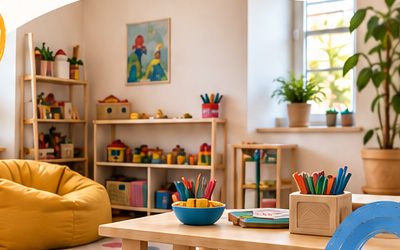
After the intake meeting, I get to know your child. I tell them who I am, show them the playroom and explain, in a way that suits your child's age, what play therapy is and what it can do here.
This is followed by five to a maximum of six observation sessions. Your child is given time to become familiar with me and with the playroom.
During these sessions, I observe how your child plays, which themes and feelings come up in the play and how the contact between us develops. After the observation phase, I write an observation report. In a meeting we discuss my findings and together formulate the goals for the rest of the therapy.
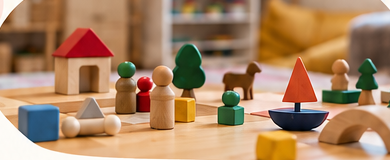
A play session lasts about fifty minutes and usually takes place once a week. To a large extent, your child decides what to play with and how. This could be pretend play, building, drawing, moving or playing with figures, animals and other materials.
I follow your child's lead, join in when appropriate and respond to what happens in the play and between us. Sometimes I ask questions, name what I see or set a boundary. At other moments I give space and wait. Every child develops in their own way and at their own pace.
We also keep talking with each other during the therapy. After about ten treatment sessions, we schedule an interim evaluation. For longer processes, we repeat this conversation regularly.
In these conversations we discuss how things are going, what changes you notice at home and at school and how the treatment goals are progressing. We also look ahead and estimate how the process will continue and how long it may take.
When it is time to finish, I prepare your child for saying goodbye. Your child is given space to look back on their experiences. We also schedule a final meeting. Together we look back on the original question, discuss which goals have been achieved and how you can continue to support your child.
Would you like to discuss whether play therapy could help your child? Feel free to get in touch.
Get in touch